
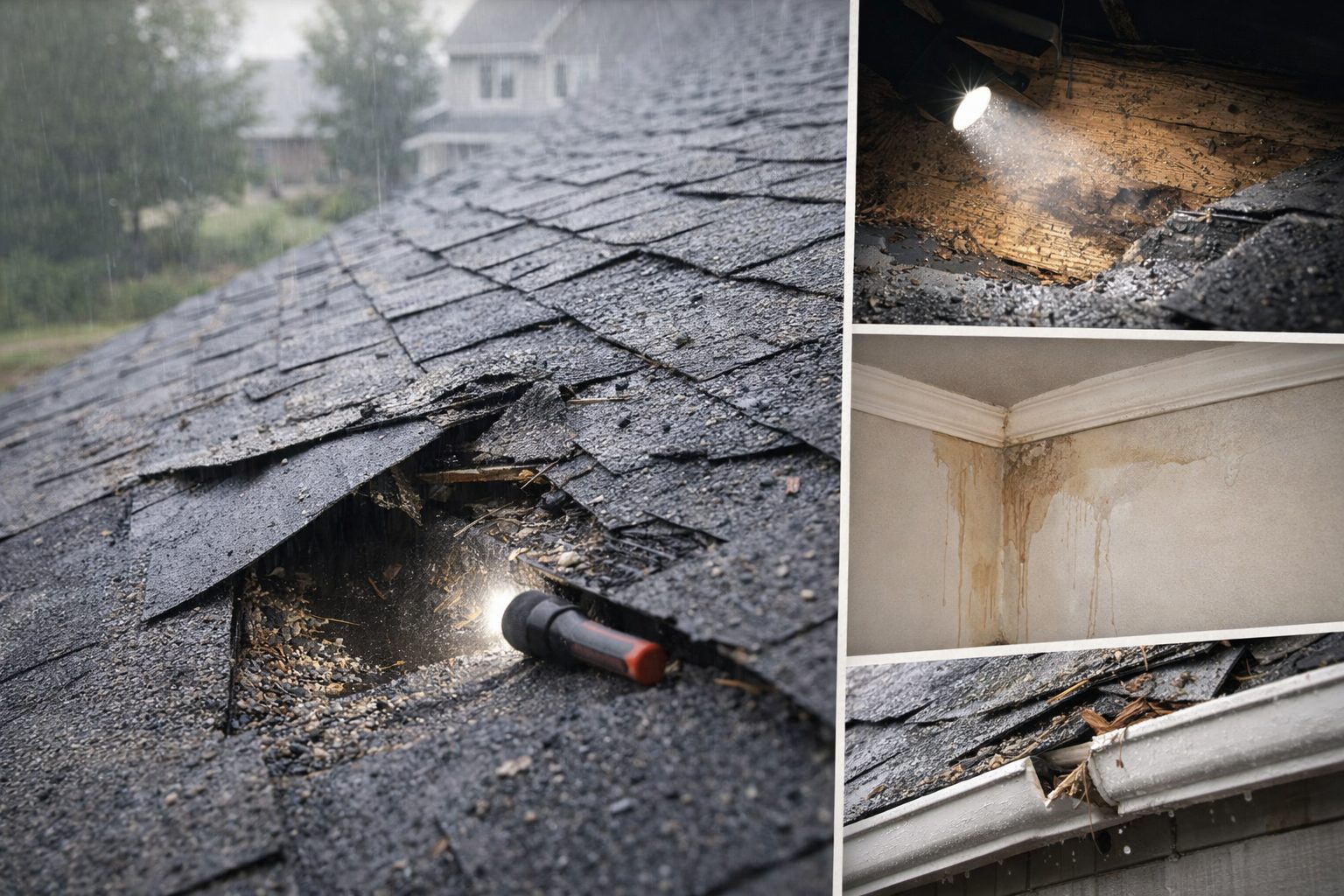
After a storm passes through Southwest Missouri, most homeowners look for obvious damage like missing shingles or fallen debris. While those issues are easy to spot, many roofing problems are far less visible and can go unnoticed until they lead to leaks or interior damage.
Hidden storm damage is one of the most common reasons homeowners end up dealing with larger repairs later. Knowing what to look for early can help you address issues before they become more serious.
Why Hidden Damage Happens
Storm damage does not always result in immediate failure. In many cases, hail and wind weaken roofing materials without fully breaking them at the time of impact.
Over time, these weakened areas can:
– Lose their ability to shed water properly
– Deteriorate faster under sun exposure
– Allow moisture to slowly enter the roofing system
This is especially common in Southwest Missouri, where storms often bring a mix of hail, wind, and heavy rain in a short period of time.
1. Granule Loss on Shingles
One of the most common signs of hidden damage is granule loss.
Granules are the outer protective layer of asphalt shingles. When hail impacts a roof, it can knock these granules loose without completely tearing the shingle.
Signs to look for:
– Dark spots or patches on shingles
– Granules collecting in gutters or near downspouts
– Uneven color across sections of the roof
While this may not cause an immediate leak, it reduces the lifespan of the roof and makes shingles more vulnerable to future damage.
2. Soft or Bruised Shingle Areas
Hail can create soft spots in shingles that are not visible from the ground.
These areas may:
– Feel slightly indented
– Appear normal but have internal damage
– Break down more quickly over time
This type of damage is often only identified during a close inspection.
If your home was in a recent storm path, it is worth verifying using the Extreme Weather Report we offer for free.
3. Flashing Damage Around Roof Penetrations
Storms can impact metal flashing around chimneys, roof vents, skylights, and valleys.
Storms can loosen, bend, or create small gaps in flashing, which can allow water to enter over time.
4. Wind-Related Shingle Movement
High winds do not always remove shingles completely. In many cases, they lift and loosen them without full detachment.
This can lead to:
– Broken adhesive seals
– Slightly lifted edges
– Increased vulnerability during the next storm
Once shingles lose their seal, they are much more likely to fail under future wind events.
5. Gutter and Drainage Impact
Gutters often show signs of storm damage before the roof does.
Look for:
– Dents in gutters or downspouts
– Loose or misaligned sections
– Water overflowing in areas where it normally drains properly
These issues can affect how water moves off the roof, increasing the risk of long-term damage.
For more information on how hail affects roofing systems, you can review our Hail Damage resource page.
6. Interior Signs That Appear Later
In some cases, the first noticeable signs of roof damage appear inside the home.
Watch for:
– Water stains on ceilings
– Discoloration near walls or corners
– Musty smells in attic spaces
– Moisture appearing after rainfall
These symptoms often indicate that water has already entered the system.
If interior damage has developed, restoration work may be needed:
https://www.advancedrestorationsmo.com/storm-damage/interior-restoration/
When to Take the Next Step
If your home has experienced a recent storm and you notice any of these signs, it is a good idea to have the roof evaluated more closely.
Even if everything looks normal from the ground, hidden damage can still exist.
A professional inspection helps identify areas that may not be visible and provides clarity on whether repairs are needed.
Request a Roof Inspection
If you are unsure whether your roof was affected by a recent storm, scheduling an inspection is the safest way to confirm.
You can request a free inspection with our online form.
A thorough evaluation will help you understand the condition of your roof and what steps, if any, should be taken next.
Schedule a Free Inspection
Aug. 18, 2026
Can Hail Damage a New Roof?
Aug. 11, 2026
Buying a House? How to Tell If the Roof Will Need Replacing Soon
Aug. 04, 2026
Does Homeowners Insurance Cover an Old Roof in Missouri?
Jul. 28, 2026
What Happens If New Hail Hits a Roof That Already Has an Open Insurance Claim?
Jul. 21, 2026