
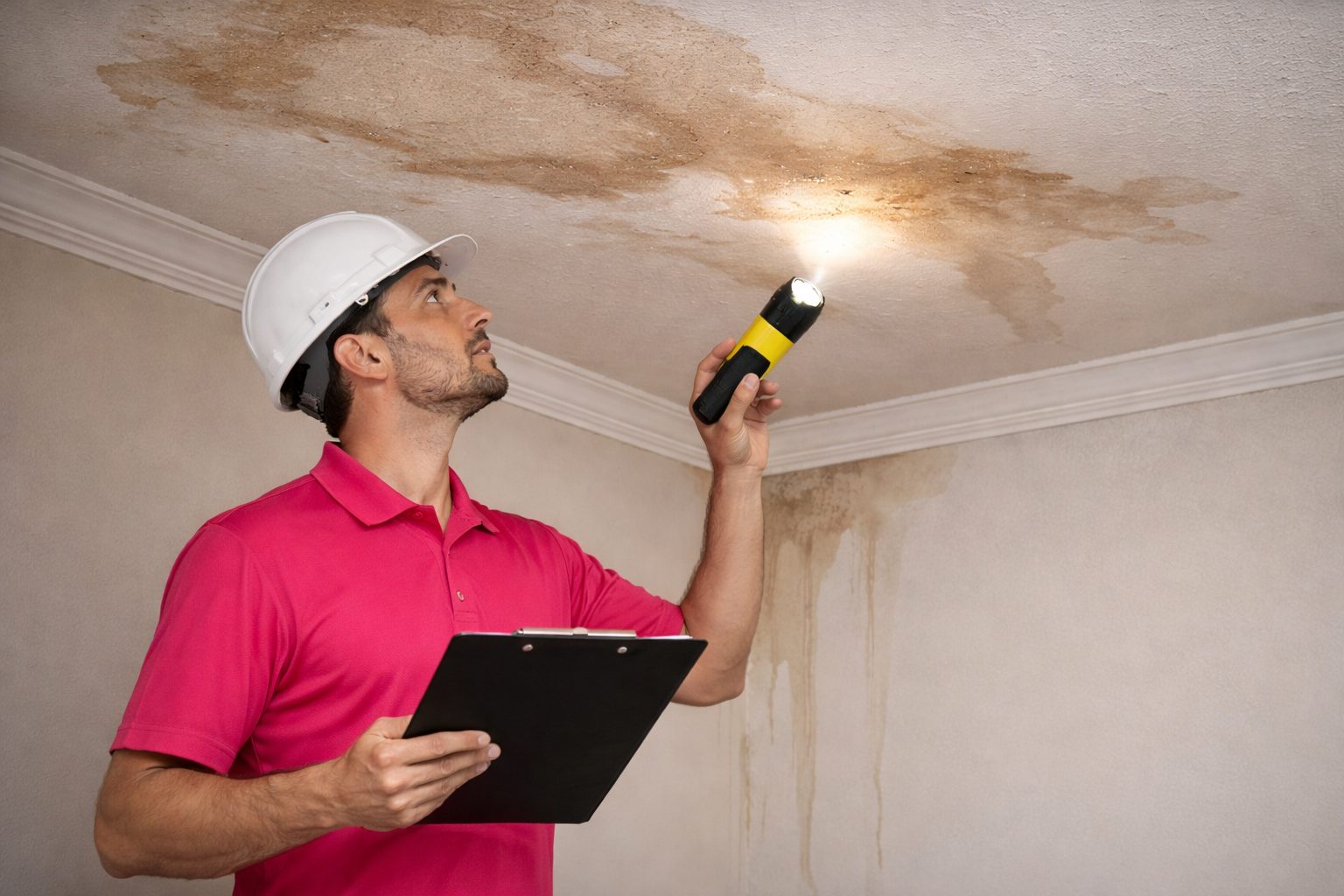
After a strong storm moves through Southwest Missouri, it is common for homeowners to feel pressure to act quickly. Between visible damage, neighbors filing claims, and contractors knocking on doors, it can be difficult to know what the right first step should be.
Filing an insurance claim may eventually be part of the process, but what you do before filing can make a significant difference in how smoothly everything goes.
Step 1: Make Sure Your Property Is Safe
Before focusing on repairs or insurance, check for any immediate safety concerns.
– Downed power lines near your home
– Large tree limbs on or around the structure
– Sagging ceilings or active water entry
If there are active hazards, those should be addressed first. Safety should always come before documentation or repairs.
Step 2: Take Initial Photos From the Ground
Before anything is moved or repaired, it is helpful to document the condition of your property.
– Taking photos of your roof from the ground
– Documenting debris, fallen branches, or visible damage
– Capturing interior signs like ceiling stains or leaks
This creates a baseline record of what the property looked like immediately after the storm.
Step 3: Check if Your Home Was in the Storm Path
Not every property in a city is impacted the same way. Some neighborhoods receive heavier hail or stronger wind than others.
You can verify this using the Extreme Weather Report.
This helps confirm whether your home was in an area that experienced damaging conditions and provides useful context moving forward.
Step 4: Avoid Making Immediate Assumptions
One of the most common mistakes homeowners make is assuming that visible damage automatically requires an insurance claim.
– Some damage may be minor and repairable
– Some issues may not meet insurance thresholds
– Some problems may not be storm-related at all
Filing a claim without fully understanding the situation can sometimes complicate the process.
Step 5: Have the Roof Evaluated Before Filing
Before contacting your insurance provider, it is often helpful to have the property looked at more closely.
– Identifying storm-related damage
– Checking areas not visible from the ground
– Documenting findings with photos
You can learn more about storm-related damage on our main Storm Damage page.
Step 6: Take Steps to Prevent Further Damage
If your home has an active leak or exposed area, it is important to take reasonable steps to prevent additional damage.
– Placing containers under leaks
– Moving belongings away from affected areas
– Covering exposed areas if it can be done safely
Many insurance policies expect homeowners to take basic steps to reduce further damage after a storm.
If interior damage has already occurred, you can review restoration options online or give us a call to discuss further.
Step 7: Understand When It Makes Sense to File a Claim
Once you have confirmed storm activity, reviewed visible signs, and had the property evaluated, you are in a better position to decide whether filing a claim is the right next step.
This approach helps avoid filing unnecessary claims, missing important documentation, or running into delays later in the process.
What to Do Next
If your home was recently exposed to severe weather, take a step-by-step approach to avoid confusion and unnecessary stress.
Start by confirming storm activity, documenting what you can see, and having the property evaluated before making any insurance decisions.
You can request a free inspection online or by giving us a call.
A thorough inspection can help you understand your roof’s condition and determine the best path forward.
Schedule a Free Inspection
Sep. 15, 2026
How Can You Tell How Old Your Roof Is? 5 Ways to Find Out
Sep. 08, 2026
How Long After a Hailstorm Can Roof Damage Start Leaking?
Sep. 01, 2026
What Summer Storms May Have Left Behind on Your Roof
Aug. 25, 2026
How Much Hail Damage Does a Roof Need Before It Should Be Replaced?
Aug. 18, 2026