When the summer sun beats down on Southwest Missouri, most homeowners focus on keeping their air conditioning running smoothly. But while you are staying cool inside, your roof is taking the brunt of the extreme weather.
Many people think of a roof simply as the shingles that keep the rain out. In reality, a healthy roof is a complex, breathing system. One of the most critical—yet frequently overlooked—components of long-term roof health is proper attic ventilation. Without it, the intense Ozark summer heat can quietly destroy your roofing system from the inside out.
The Hidden Dangers of a Baking Attic
During a typical July or August afternoon in Springfield, outside temperatures in the 90s can easily push the temperature inside an unventilated attic past 150°F. When this massive amount of heat is trapped with nowhere to go, it acts like an oven directly beneath your roof deck.
This trapped heat causes severe roof heat damage. It literally bakes your shingles from the bottom up. Over time, this constant thermal stress leads to premature aging, causing the asphalt to blister, crack, and shed its protective granules much faster than it should. Even premium shingles will fail well before their expected lifespan if they are constantly subjected to an unventilated, superheated attic.
The Science of Airflow: Intake and Exhaust
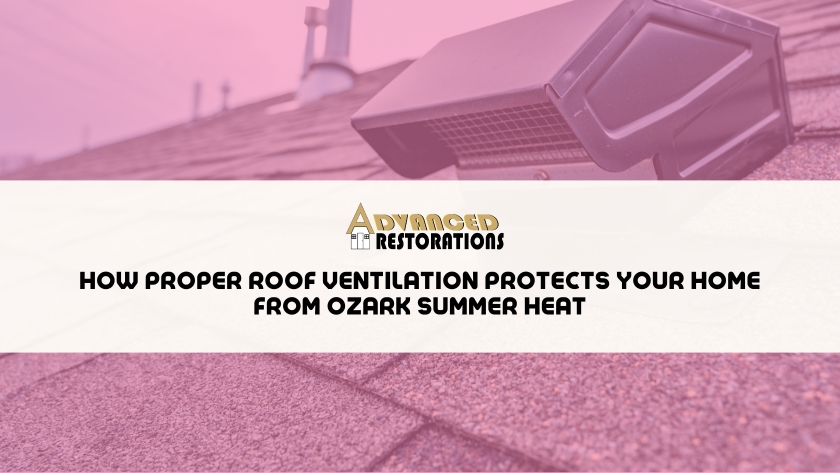
Proper attic ventilation in Springfield MO relies on a balanced system of intake and exhaust to keep the air moving, regulating the temperature of your roof deck.
- Intake Vents: Located at the lowest part of the roof (typically in the soffits under the eaves), these vents allow cooler, fresh outside air to get pulled into the attic space.
- Exhaust Vents: Positioned at or near the very peak of the roof (such as ridge vents), these allow the rising hot air to escape.
When perfectly balanced, this continuous flow of air sweeps the extreme heat out of your attic. Not only does this protect the integrity of your shingles, but it also creates a thermal buffer between the blazing sun and your living space, which is one of the most effective methods for how to lower attic temperature and reduce your overall cooling costs.
Signs Your Home is Suffering from Poor Ventilation
You don’t necessarily have to climb into your attic to know if your home is struggling to breathe. Here is a simple checklist of warning signs that indicate your ventilation system may be inadequate:
- Spiking Cooling Bills: If your air conditioning unit is running constantly but your energy bills are still climbing unexpectedly, trapped attic heat may be transferring down into your living spaces.
- Uneven Indoor Temperatures: Is your upstairs significantly hotter than your downstairs? This is a classic symptom of a baking attic radiating heat through the ceiling.
- Wavy or Rippled Shingles: From the ground, look up at your roof lines. If the shingles look distorted, blistered, or prematurely curled, they may be cooking from the inside out.
- Excessive Attic Humidity: While summer is about heat, poor ventilation also traps moisture. Over time, this can lead to weakened roof decking and long-term degradation of the system.
Proactive Defense for Your Roofing System
Protecting your home from extreme summer weather means looking beyond just the surface of the shingles. Ensuring your roof can properly breathe is one of the most proactive steps you can take to extend the life of your materials and keep your home energy-efficient.
If you have noticed uneven temperatures in your home or want to ensure your attic ventilation is properly balanced before the worst of the summer heat arrives, call us at 417-932-2339 for a comprehensive roof health assessment.
Schedule a Free Inspection
Sep. 15, 2026
How Can You Tell How Old Your Roof Is? 5 Ways to Find Out
Sep. 08, 2026
How Long After a Hailstorm Can Roof Damage Start Leaking?
Sep. 01, 2026
What Summer Storms May Have Left Behind on Your Roof
Aug. 25, 2026
How Much Hail Damage Does a Roof Need Before It Should Be Replaced?
Aug. 18, 2026