
How Storm Damage Can Affect More Than Just Your Roof
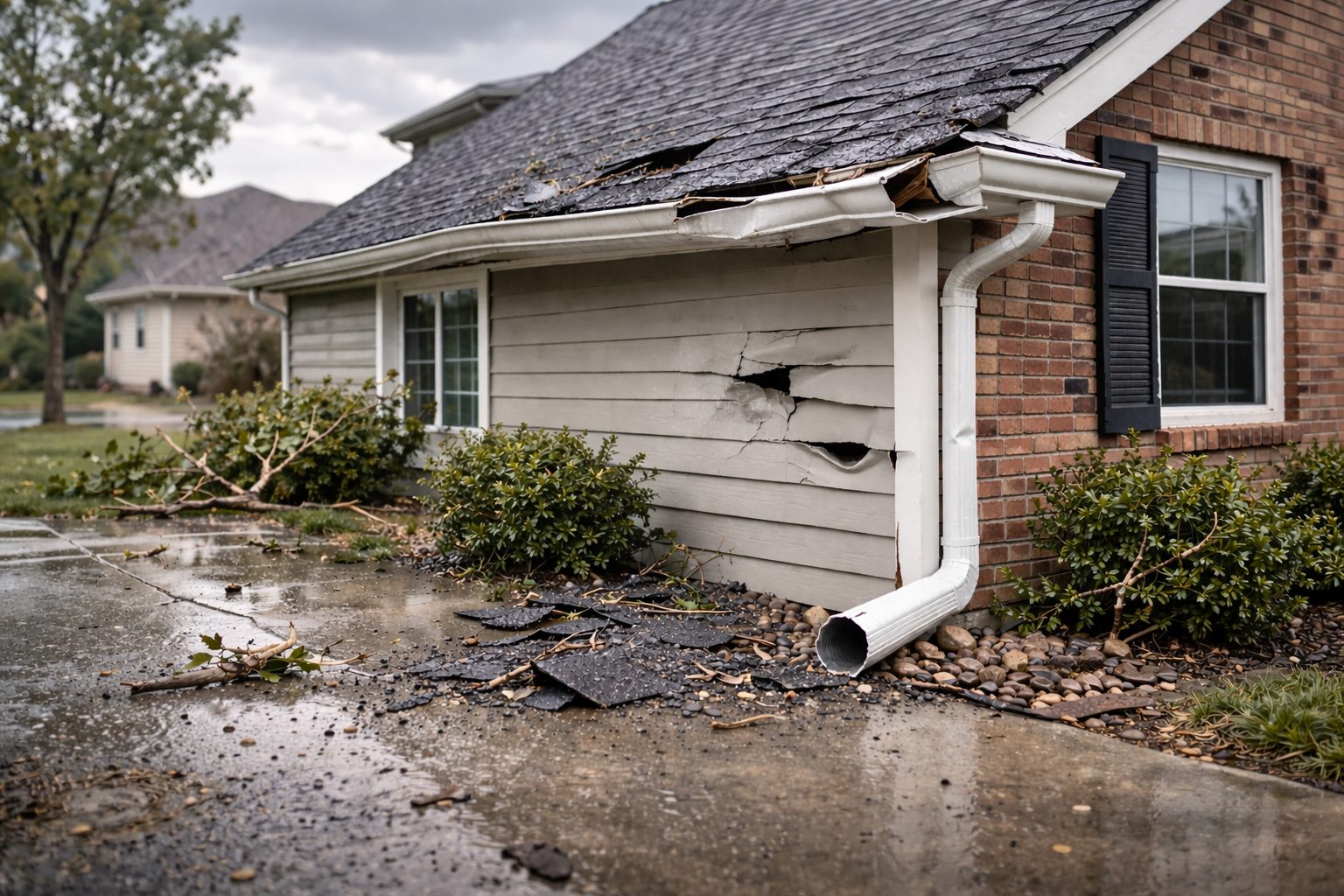
When a storm moves through Southwest Missouri, most homeowners focus on their roof first. While the roof is often the most exposed part of the home, storm damage rarely affects just one area.
Wind, hail, and debris can impact multiple exterior systems at the same time. In many cases, damage to gutters, siding, flashing, or even interior spaces can occur alongside roofing issues.
Understanding how storms affect the entire exterior of your home can help you catch problems earlier and avoid more extensive repairs later.
Storm Damage Is Not Always Limited to One Area
Severe weather events in the Ozarks often involve a combination of high winds, hail, and heavy rainfall.
Because these forces act on the home at the same time, different parts of the structure can be affected in different ways.
It is common for damage to appear in multiple areas, even if only one issue is immediately noticeable.
Roof Surface and Shingle Damage
The roof is typically the first area impacted during a storm.
Common issues include:
– Missing or lifted shingles from wind
– Granule loss or surface impact from hail
– Punctures or damage from falling debris
While some of this damage is visible, other issues may not be obvious without a closer look.
You can learn more about how storm damage affects roofing systems on our Storm Damage Resources page.
Gutter and Drainage System Impact
Gutters play an important role in directing water away from your home, and they are often affected during storms.
Damage may include:
– Dents from hail
– Sections pulling away from the roofline
– Improper drainage due to misalignment
Even small issues with gutters can lead to water backing up toward the roof or foundation over time.
Flashing and Seal Areas
Flashing is installed around areas where water is more likely to enter, such as chimneys, roof vents, skylights, and valleys.
Storms can cause damage by loosening, bending, or shifting these materials. Even minor changes can allow water to enter gradually.
Siding and Exterior Surfaces
In addition to the roof, siding can also be impacted during storms.
This may include:
– Cracks or dents from hail
– Loose panels from wind pressure
– Areas where moisture can begin to enter
While siding damage may seem cosmetic at first, it can lead to long-term issues if not addressed.
Interior Damage from Exterior Issues
When multiple exterior systems are affected, it increases the chance that water may enter the home.
Interior signs can include:
– Water stains on ceilings or walls
– Damp insulation in attic spaces
– Musty odors or moisture buildup
In some cases, interior damage is the first sign that something on the exterior has been compromised.
If damage has already reached the interior, you can review restoration options here:
https://www.advancedrestorationsmo.com/storm-damage/interior-restoration/
Why It Helps to Check the Full Property
After a storm, it is easy to focus on the most obvious issue. However, looking at the full exterior of the home provides a more accurate picture of what actually happened.
This approach helps identify multiple areas of damage, prevent smaller issues from being overlooked, and provide better documentation if needed.
If your home was in a recent storm path, it can also be helpful to confirm activity in your area:
https://www.advancedrestorationsmo.com/extreme-weather-report/
What to Do Next
If your home has recently experienced a storm, it is important to take a complete view of the property rather than focusing on just one area.
Start by checking for visible signs, reviewing storm activity, and paying attention to any changes inside the home.
If you would like a full evaluation, you can request a free inspection with our online form.
A thorough inspection can help identify all affected areas and give you a clear understanding of what needs attention.
Schedule a Free Inspection
Mar. 24, 2026
How Storm Damage Can Affect More Than Just Your Roof
Mar. 17, 2026
How Long Do You Have to File a Roof Insurance Claim in Missouri?
Mar. 10, 2026
What to Do Immediately After a Storm Before Filing an Insurance Claim
Mar. 03, 2026
The Most Common Signs of Hidden Roof Damage After a Storm
Feb. 24, 2026