
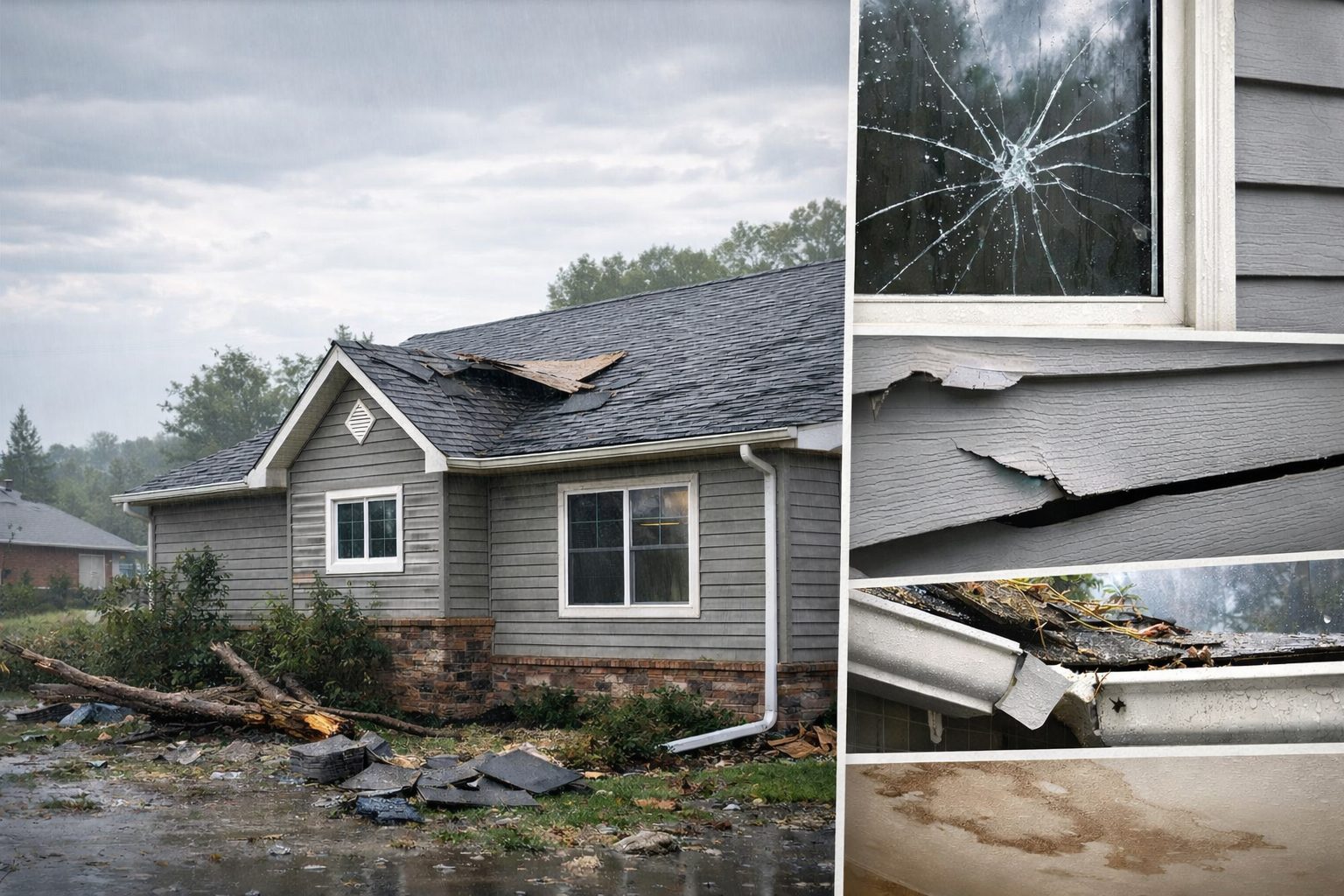
How to Tell If Your Home Was Hit by a Storm in Missouri
If you live in Southwest Missouri, you already know how quickly storms can move through the area. Hail, high winds, and heavy rain can all cause damage that is not always obvious from the ground. Many homeowners are left wondering if their property was actually affected or if everything is fine.
Understanding how to identify storm impact early can help you avoid larger repairs, prevent interior damage, and make informed decisions about next steps.
Why Storm Damage Is Often Missed
After a storm passes, the most obvious damage usually gets attention right away. Things like fallen branches or missing shingles are easy to spot. However, many types of storm damage are less visible and can go unnoticed for weeks or even months.
In Southwest Missouri, hail and wind damage often affect areas such as:
– Shingle surfaces where impacts are not immediately visible
– Flashing around chimneys, vents, and valleys
– Gutters and drainage systems
– Roof edges where wind uplift occurs
Damage in these areas can allow water to enter the roofing system slowly, leading to leaks, mold, or structural issues over time.
Step 1: Check Your Home’s Storm History
One of the most reliable ways to determine if your home may have been impacted is to review the actual storm activity at your address.
You can use the Extreme Weather Report to see verified hail and wind events in your area.
This tool helps confirm whether your home was in the path of damaging weather, even if there were no immediate visible signs.
If your property falls within a recent storm path, it is a strong indicator that a closer inspection is worth considering.
Step 2: Look for Visible Signs Around Your Property
While not all damage is easy to spot, there are several common indicators homeowners can check safely from the ground.
Look for:
– Pieces of shingles in the yard
– Dents or marks on gutters, downspouts, or metal fixtures
– Granules collecting near downspouts or in driveways
– Debris impact areas from branches or wind-blown objects
These signs do not always confirm full roof damage, but they are often early indicators that the roofing system has been affected.
For more information on how hail impacts roofing systems, you can review our Hail Damage page.
Step 3: Watch for Interior Warning Signs
Storm damage is not always limited to the exterior. In many cases, the first noticeable issue appears inside the home.
Keep an eye out for:
– Water stains on ceilings or walls
– Peeling paint or bubbling drywall
– Musty odors in attic or upper levels
– Dripping or moisture after rainfall
These symptoms often indicate that water has already entered the roofing system and should be addressed quickly.
If interior damage has already occurred, restoration may also be needed.
Step 4: Understand the Role of Professional Inspection
Even if everything appears normal from the ground, storm damage can still exist. Many issues require a closer look to properly identify.
A professional inspection focuses on:
– Shingle condition and impact points
– Flashing and seal integrity
– Vent and penetration areas
– Attic conditions and moisture presence
The goal is to document what is actually happening with your roof so you can make an informed decision about repairs or next steps.
If you are unsure whether your home was impacted, scheduling an inspection is the safest way to confirm.
What to Do Next
If you believe your home may have been affected by a recent storm, the best next step is to verify the damage and understand your options.
Start by reviewing your storm history, checking for visible signs, and addressing any interior concerns. From there, a professional inspection can provide clarity on whether repairs are needed.
You can request a free inspection by giving us a call or using our online inspection scheduling form.
A thorough evaluation will help you determine the condition of your roof and ensure any damage is properly documented.
Schedule a Free Inspection
Mar. 17, 2026
How Long Do You Have to File a Roof Insurance Claim in Missouri?
Mar. 10, 2026
What to Do Immediately After a Storm Before Filing an Insurance Claim
Mar. 03, 2026
The Most Common Signs of Hidden Roof Damage After a Storm
Feb. 24, 2026
How to Tell If Your Home Was Hit by a Storm in Missouri
Feb. 17, 2026